
What “Trauma-Informed” Actually Means — And Why It Matters for Anyone Seeking Therapy

The phrase "trauma-informed" is everywhere right now. It's in yoga studio bios, corporate wellness emails, parenting books, school district communications. I have seen it applied to interior design and to dog training. I am genuinely glad the language has spread — for decades, trauma was a clinical concept most people had no working vocabulary for.
But the word has gotten worn smooth from overuse, and a lot of people coming into my practice in Boston don't actually know what they are being promised when a therapist says they work this way.
So let me tell you what it means when I say it. Not in textbook language. In the actual room.
Where the term comes from
Trauma-informed care, as a formal concept, came out of work consolidated by SAMHSA — the federal agency overseeing substance abuse and mental health services. The framework has four principles worth knowing, because they tell you what to listen for in a therapist:
Realize that trauma is widespread and shapes how people relate to everything — including the therapy itself.
Recognize the signs of trauma in clients, even when trauma isn't the presenting issue.
Respond by integrating that knowledge into every part of the practice — intake, pacing, language, environment.
Resist re-traumatization. This is the most important one and the easiest to fail at.
That fourth principle separates a therapist who is genuinely trauma-informed from one who has just absorbed the language.
Trauma-informed practice isn't a technique. It's a way of being in the room that assumes someone might be carrying something they haven't told you about yet.
What this looks like in a real session
When I work with a new client, I assume — until I know otherwise — that something in their history is shaping how they show up. Not as a diagnosis. As a baseline of respect.
This changes small things that turn out to be large. I tell people what we're going to do before we do it. I check in about pacing. I do not push for the story before someone is ready. I do not punish them, with my face or my silence, when they pull back.
If a client gets quiet, I do not fill the silence to make myself comfortable. I let them have it. Silence is often where the real material is, and rushing in to fill it is a clinician problem, not a client problem.
These sound like small adjustments. To someone who has been on the other end of a clinician who didn't make them, they are not small. They are the difference between feeling like a person and feeling like a case.
Why it matters even if you don't think of yourself as a trauma survivor
A lot of people come into my practice for anxiety, or a stuck feeling, or a relationship that keeps falling into the same pattern. They have not labeled what they carry as trauma. Their childhoods, when they describe them, were "fine."
Then we slow down. What comes up over weeks is a long, quiet accumulation. A parent who was unpredictable. A school environment that made them feel constantly observed. A medical event in childhood no one explained. A relationship in their twenties that taught them their needs were inconvenient.
None of this looks like "trauma" in the dramatic sense. All of it shapes the nervous system the same way. A trauma-informed therapist does not need a capital-T story to take this seriously. That is the whole point.
Why this matters specifically in Massachusetts
Massachusetts has been ahead of much of the country on trauma-informed practice — the state has invested in training, particularly in school systems and substance use treatment. The recovery community in this state has been a leader in integrating trauma awareness into addiction work.
But access has been uneven. Trauma-informed care has historically been most available in well-resourced settings — academic medical centers, private practices in Brookline and Cambridge. Communities that have experienced the most concentrated trauma — Dorchester, Mattapan, Roxbury, parts of Lynn and Brockton — have often had the least access to clinicians trained to do this work well.
Telehealth has begun to change that. A client in Dorchester can now work with a therapist whose physical office is across town, or who has no office at all.
What to ask a prospective therapist
If trauma-informed care matters to you, ask these on the consultation call:
1. What does trauma-informed mean to you, in practice? Listen for specifics, not buzzwords.
2. How do you handle sessions that get hard? You want to hear about pacing, choice, checking in.
3. What happens if I need to slow down? The answer should be: that's allowed.
A good therapist will not be defensive about these questions. A good therapist will be glad you asked.
Fay White, M.Ed., is based in Boston and offers virtual sessions across Massachusetts.
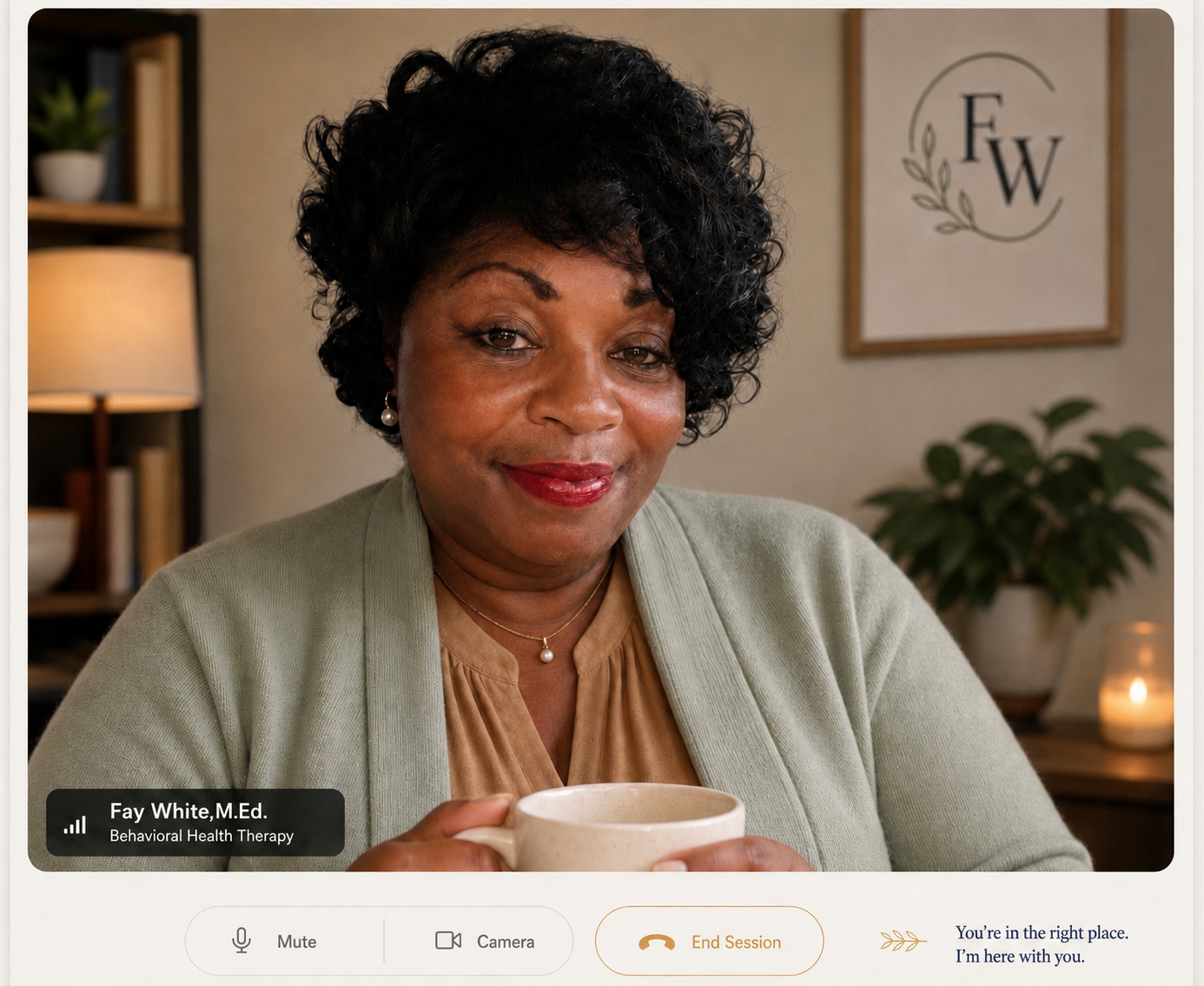
Fay White, M.Ed.
LADC1 · Licensed MA · Based in Boston
Fay White has spent over 30 years counseling Massachusetts clients on behavioral health. She built her practice one client at a time, staying small by choice, and staying focused on the kind of work that actually moves people forward.
Book a free consultation